What 30 Days of Painting Every Day Taught Me
practice · process
From July 17 to August 15, I completed a 30-day painting challenge: one painting a day, for 30 days straight.
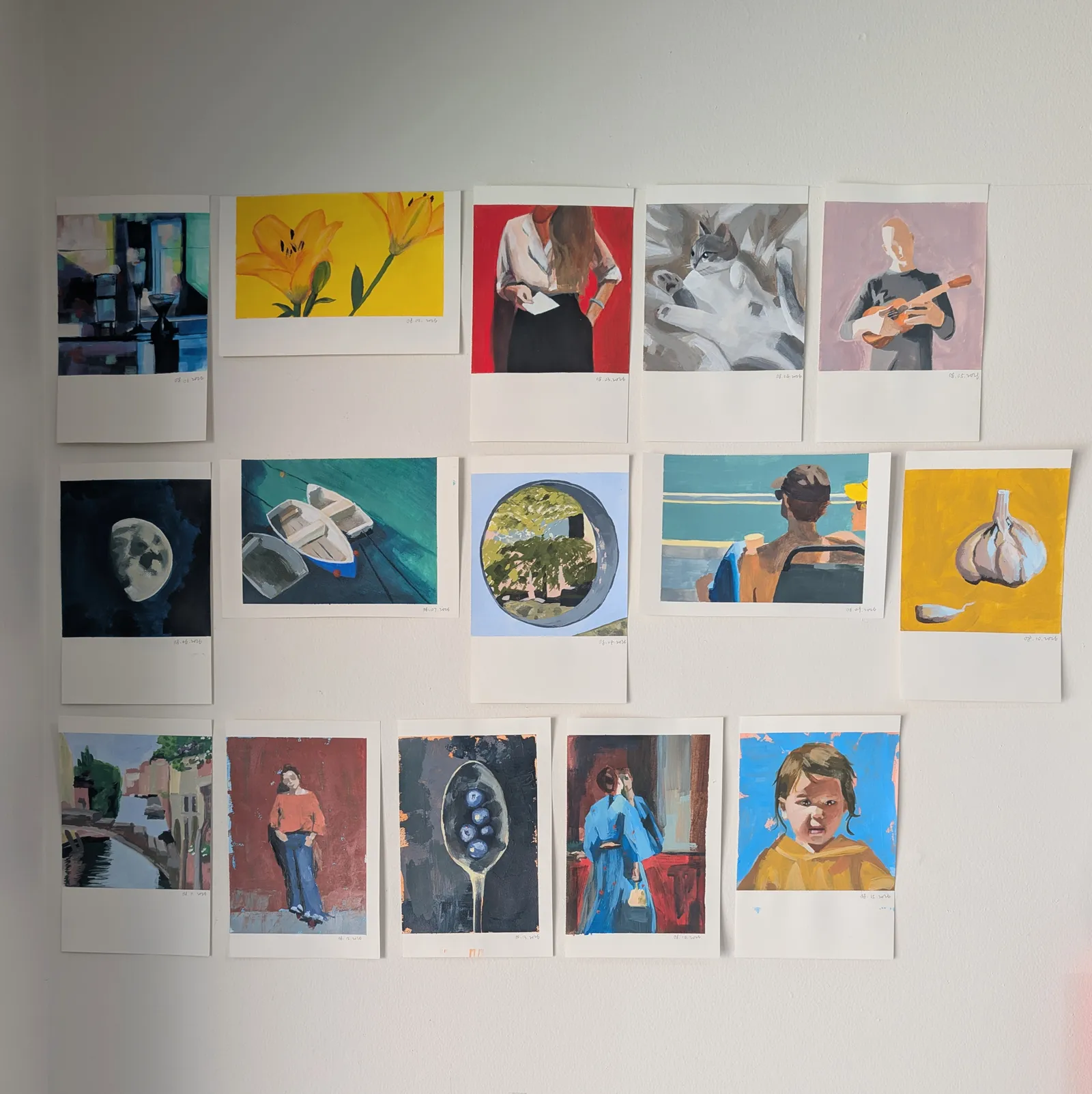
When the challenge was over, I stuck every painting up on the wall. Looking at all thirty of them together, I felt something I don’t feel often: I was proud of myself. I’ve never painted that much before, and finishing something I set out to do, on my own terms, felt like its own accomplishment.
The rules
The terms of the challenge were pretty simple: finish a small painting every single day for 30 consecutive days. It didn’t matter how busy I was or whether I felt like painting that day. I could paint something simple, even if it only took 20 minutes, but I had to finish a painting.
Since finishing, I’ve been sorting through what I liked, what I didn’t, and what I can adjust to come up with an active but sustainable painting schedule I can stick to long term.
Nothing went to waste
During the 30 days I used two stay-wet palettes. Starting on day two, I could always come back to the leftover paint from the day before: use it directly, mix it into something new, or combine a bunch of leftovers into a beautiful gray or brown.
Before this challenge, I’d finish a painting with a lot of paint left over and tell myself I’d use it for the next one, only for the next one to happen weeks or months later, when all the leftover paint had already dried out. So painting frequently has the benefit of saving paint and encouraging creative reuse of it, but I know the looming threat of wasted paint isn’t enough on its own to keep me coming back to the canvas.
My phone habits
Having to plan each day changed how I used my phone. I had a vague sense of things I wanted to get to during the challenge, but with the month largely unmapped, whenever I picked up my phone my first instinct was to choose my next reference photo instead of opening Instagram. Some of my favorite paintings came out of days I hadn’t planned anything in advance.
Small canvases, big courage
Painting on small canvases had a few compounding benefits.
Because the investment of both time and materials is lower, small canvases gave me more courage to experiment and make mistakes. One day I started a beach scene, and about ten minutes in I realized it wasn’t going to work, so I just put up a new piece of paper and started something else!
That freedom changed my whole mindset going into each day. I’m allowed to make mistakes while iterating, and I can enjoy the process and have fun even when I’m making “bad” art. The fear of failing, I think, is why a lot of people stop doing what they love, and it’s definitely why I’d been having a hard time painting lately. It’s worth putting your art out there even if you don’t love it or aren’t satisfied with it. There will still be people who like it, and maybe it will bring them joy.
What I’m changing to make it sustainable
By the last week, I was a little burned out. Painting every single day on top of two young kids and everything else was hard to sustain, so rest days matter. For me, that means painting on weekdays and resting on weekends.
The other change is more practical. I painted on 5.5 × 8.5 inch paper the whole time, and now that it’s over, I want to frame some of these pieces. If I’d used more standard sizes, like 6 × 6 for the square ones and 5 × 7 for the rectangular ones, framing would be much simpler.
The beginning, not the end
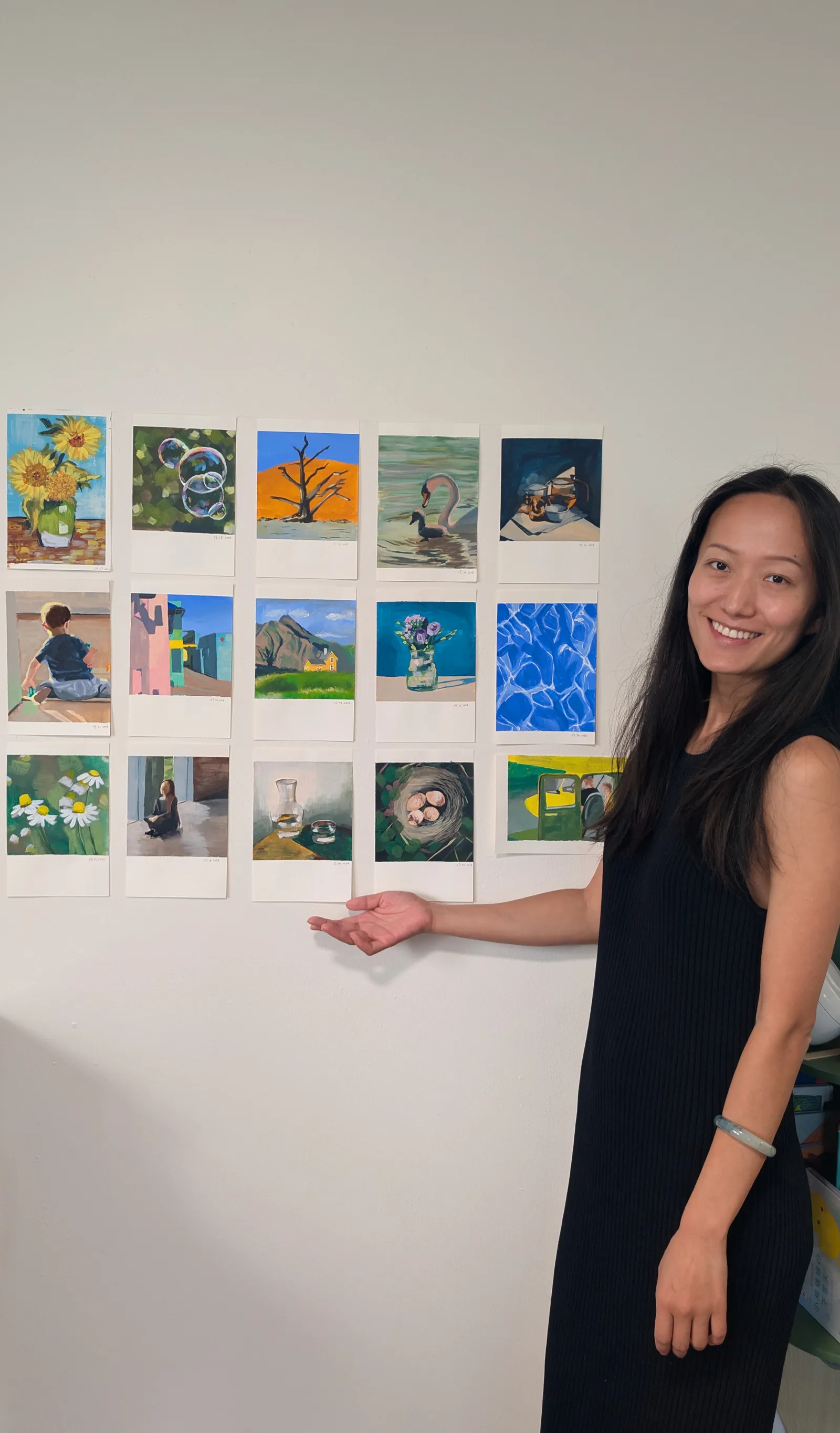
I’m glad I did this, and grateful that my family gave me the space and time to really concentrate on it. This isn’t the end. It’s the beginning. See you in future paintings.
